

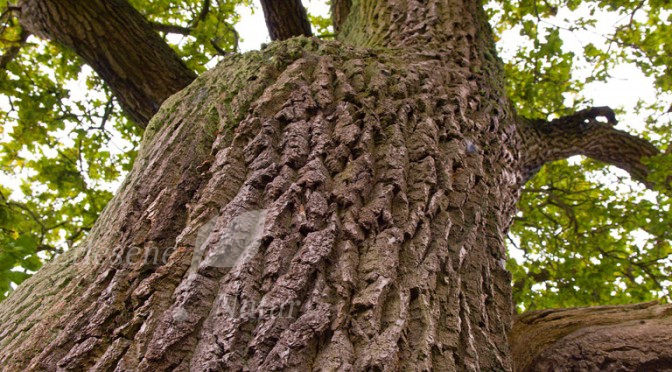
The ash can reach a maximum height of 40 m and therefore together with common beech belongs to the tallest deciduous trees in Europe. Only on mostly wet and temporarily dry soils it can compete with the beech. Together with oak and beech it is one of the commercially most important native trees. The wood is used wherever the demands for strength and elasticity are exceptionally high. In former times it was utilised for the construction of wooden wheels, today for the handles of tools and sports equipment.
If you compare the bark of ash and oak with that of beech, a big difference is apparent. The bark is rough and cracked, whereas that of beech is smooth. This difference is of large ecological significance because a rough and cracked bark offers many suitable microhabitats for insects and spiders. Therefore from a birds perspective both ash and oak are much preferred foraging sites compared with beech. This is the reason why the middle spotted woodpecker, highly specialised in searching the bark for food, does not occur in beech forests.